
3 LaunchDarkly Alternatives for Self-Hosted Feature Flags
FeatBit, Flagsmith, and Unleash are three open-source LaunchDarkly alternatives with self-hosted deployment paths. Start with FeatBit for a privately operated release-control platform, Flagsmith when identity-based remote configuration is central, and Unleash when activation strategies fit your release model. The right shortlist depends on your required SDKs, governance edition, and the release behavior you must preserve.
Compare the full operating budget when cost drives the decision, and map management, evaluation, and event paths when infrastructure ownership matters. A self-hosted proxy and a self-hosted control plane have different responsibilities; LaunchDarkly's architecture documentation helps identify your current boundary.
Short Answer
Use this shortlist as a starting point, not as a universal ranking.
| Alternative | Strongest fit when | Hosting path | What to verify in a proof of concept |
|---|---|---|---|
| FeatBit | You want open-source, self-hosted release control with targeting, rollout workflows, auditability, APIs, and observability integrations. | Docker, Kubernetes/Helm, and supported self-hosted deployment options. | Deployment tier, rule parity, SDK behavior, governance requirements, and the operations your team will own. |
| Flagsmith | You want feature flags and remote configuration in one platform, with a choice between hosted and self-managed deployment. | Hosted, Docker, cloud, Kubernetes/OpenShift, and private deployment options. | Identity and segment mapping, local versus remote evaluation, OpenFeature provider coverage, and enterprise feature boundaries. |
| Unleash | You prefer a strategy-based feature-management model built around activation strategies, constraints, segments, variants, and gradual rollout. | Open-source self-hosting plus commercial cloud or self-hosted editions. | Strategy translation, plan and version boundaries, Edge requirements, governance, and SDK topology. |
All three can be viable. The right choice is the one that reproduces your real LaunchDarkly release path with the least operational and migration risk.
Choose by the Problem You Need to Solve
| Your reason for evaluating alternatives | First check | A useful next step |
|---|---|---|
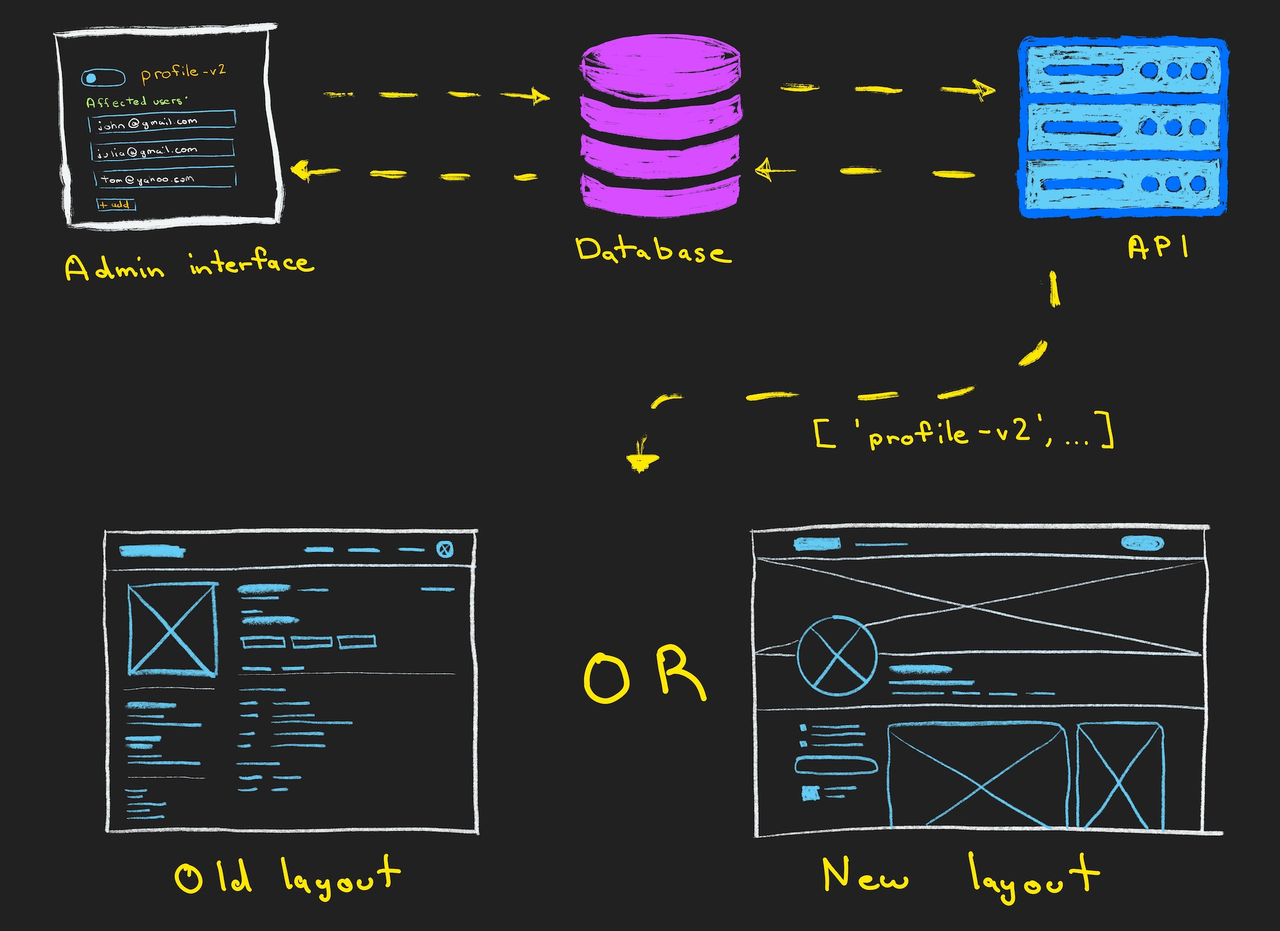
| You need to operate the management service in your infrastructure | Where flags are authored, configuration is stored, SDKs connect, and events are sent | Compare self-hosted operating models |
| Your bill no longer fits your usage | License, required governance, hosting, upgrades, and incident ownership | Fill in the four-part TCO model with your own inputs |
| You need enterprise access and change controls | Which edition includes each required permission, SSO integration, audit workflow, or approval | Record the exact edition and evidence URL before comparing quotes |
| You want a controlled migration | Context identity, rule translation, fallback behavior, and percentage assignments | Run the evaluation check below before switching the application path |
This comparison focuses on feature management. If your primary buying job is warehouse analytics or experimentation, use the broader feature flag tools comparison to build a different shortlist.
What Is Free, and What Needs an Edition Check?
A free repository is a starting point for a proof of concept. Record what your production deployment actually includes:
| Candidate | Community starting point | Verify before production |
|---|---|---|
| FeatBit | Open-source feature flag management and documented self-hosting | Licensed capabilities, including the SSO, approval, and fine-grained access controls you require; chosen deployment tier and support |
| Flagsmith | Open-source flag and remote configuration platform | Enterprise edition boundaries, identity and segment behavior, scaling topology, and support |
| Unleash | Open-source feature management with activation strategies | OSS versus Enterprise, feature availability, and the Edge option for your SDK topology |
Ask the same procurement question for each product: which release, image, edition, and contract will provide every control on our required list? Use the pricing page for FeatBit's current packages. This guide does not assume that a community install includes every commercial feature or quote a universal saving.
Check Migration Parity Before You Change Traffic
A migration can return the same overall treatment percentage while moving individual customers between variations. A correct boolean demo also says little about cold starts, missing attributes, or a multivariate flag. Evaluate both providers for the same context and compare the results before the candidate controls the response.
Download the evaluation parity kit. It contains a TypeScript comparator and two small JSON examples. The tool runs locally, makes no network requests, and needs Node.js 22.6 or newer.
node --experimental-strip-types compare-evaluations.ts baseline.example.json candidate.example.json
The supplied examples deliberately change one customer's checkout-v2 result. The report finds one differing value; JSON objects with the same properties in a different order still match. These are synthetic inputs to demonstrate the checker, not vendor test results.
Replace the examples with results you collect from your current and candidate SDKs:
[
  {
    "flagKey": "checkout-v2",
    "contextKey": "sample-customer-a",
    "scenario": "normal",
    "value": true
  }
]
Use the same pseudonymous context key in both files. Export the typed value the application would use, including its fallback; do not convert booleans, numbers, or JSON to display strings. The exit status is 0 when every supplied row matches, 1 for mismatches or missing rows, and 2 for invalid input. It rejects duplicate identities and empty exports so incomplete coverage cannot silently look like success.
| Scenario to collect | What a difference can reveal |
|---|---|
| Explicit user target and overlapping segment rules | Rule order or segment translation differs |
| Missing country, plan, or account attribute | Attribute defaults or identity modeling differs |
| The same users under a percentage rollout | Bucketing or assignment identity changed |
| Missing flag, wrong value type, or SDK initialization failure | Fallback contracts differ |
| A disconnected SDK after initialization versus an offline cold start | Cached behavior differs from startup behavior |
| A multivariate or structured configuration flag | Variation mapping or JSON values differ |
A matching file is evidence about the supplied cases. It does not prove whole-system equivalence, configuration propagation speed, experiment assignment, or production availability. Keep the existing provider authoritative until your release owners accept the remaining differences. The migration playbook covers cutover and recovery ownership.
FeatBit: Self-hosted Release Control
FeatBit is a direct fit in this shortlist when the buyer wants to own the feature flag control plane and keep release operations close to its infrastructure.
The FeatBit open-source repository documents self-hosting, targeted experiences, progressive rollout, SDKs, audit logs, workflows, APIs, and integrations. The deployment options documentation separates deployment tiers so teams can start with a smaller topology and adopt additional infrastructure as their reliability and analytics needs grow.
Evaluate FeatBit first when:
- private deployment and data ownership are purchase requirements;
- the platform team wants targeting, segments, percentage rollouts, workflows, audit history, and automation in one release-control surface;
- feature flag adoption should not be constrained by a metered SaaS model;
- Docker or Kubernetes deployment fits the existing operating model;
- a controlled migration from LaunchDarkly is preferable to a big-bang cutover.
The tradeoff is straightforward: self-hosting moves infrastructure, upgrades, backups, monitoring, and incident ownership to your team. Verify the deployment tier and licensed enterprise features you need instead of treating "open source" as proof that all production requirements are included.
For the deeper ownership decision, use the self-hosted feature flag alternative to LaunchDarkly guide.
Flagsmith: Feature Flags Plus Remote Config
Flagsmith belongs in the shortlist because its core product combines feature flags, remote configuration, identities, and segments, while supporting both hosted and self-managed operation.
The Flagsmith repository describes the platform as an open-source feature flag and remote config service that can be self-hosted or used as a hosted service. Its self-hosting documentation covers Docker, manual installation, cloud deployments, Kubernetes/OpenShift, scaling, observability, and maintenance.
Evaluate Flagsmith first when:
- remote configuration is as important as boolean feature flags;
- identity traits and reusable segments match how your application models targeting;
- you want to choose among SaaS, private cloud, or self-managed deployment;
- your language stack matches its supported client-side or server-side SDKs;
- Flagsmith's OpenFeature providers cover the runtimes where you want a vendor-neutral evaluation API.
During the proof of concept, map the exact governance features you need to the edition you plan to buy or operate. Flagsmith's official repository distinguishes its open core functionality from enterprise-level governance and management features, so an OSS demo alone is not a complete enterprise evaluation.
Unleash: Strategy-based Feature Management
Unleash belongs in the shortlist for teams that prefer an explicit strategy model for deciding who receives a feature.
The Unleash repository documents an open-source feature-management platform with self-hosted and enterprise paths. Its activation strategy model combines rollout percentages, targeting, variants, constraints, and reusable segments. Multiple strategies are evaluated independently, so rule translation should be tested rather than assumed.
Evaluate Unleash first when:
- activation strategies and constraints fit how your team thinks about targeting;
- gradual rollout and stable audience assignment are central requirements;
- you value a broad official SDK ecosystem and API-driven administration;
- you want an open-source starting point with a commercial path for larger organizations;
- your team is comfortable validating which capabilities belong to the open-source and enterprise editions.
Pay close attention to edition and version boundaries. Unleash's feature availability documentation states that plan and version determine access to some capabilities, and its OSS/Enterprise comparison should be part of procurement and architecture review.
Compare the Feature Flag Job, Not the Marketing Checklist
A generic yes-or-no feature grid hides the most important differences. Run the same representative release through each platform and score the evidence.
| Decision area | Suggested weight | Evidence to collect |
|---|---|---|
| Evaluation and runtime reliability | 30% | Rule precedence, typed variations, deterministic percentage allocation, safe defaults, cache behavior, startup behavior, and failure behavior. |
| Targeting and release operations | 25% | Context mapping, segments, progressive rollout, kill switches, scheduling, approvals, change review, and rollback speed. |
| Governance and lifecycle | 20% | RBAC, SSO, audit history, ownership, stale-flag detection, review dates, and cleanup workflow. Use a feature flag lifecycle management contract rather than leaving cleanup implicit. |
| SDK and migration fit | 15% | Required runtimes, client/server evaluation boundaries, OpenFeature coverage, configuration export/import, and rule translation effort. |
| Ownership and total cost | 10% | License, infrastructure, operations, governance overhead, data location, and support. Model all four cost buckets with the self-hosted feature flags TCO model, and validate boundary requirements against the data residency and compliance guide. |
Treat experimentation as an additional gate only if the current LaunchDarkly workload depends on it. Then test exposure logging, assignment units, metrics, analysis, and decision workflows explicitly. Do not let a polished experiment dashboard compensate for weak runtime flag behavior.
A Practical Migration Proof of Concept
Do not migrate by recreating every existing flag and switching all SDKs at once. Use a reversible proof of concept:
- Inventory flags by type, owner, environment, age, and cleanup expectation. Remove or retire stale flags before migration.
- Select 8-12 representative flags: boolean, multivariate, user-targeted, segment-targeted, percentage rollout, prerequisite or dependency, and an operational kill switch.
- Map LaunchDarkly contexts, attributes, segments, rules, fallbacks, and rollout semantics into each candidate. Record any behavior that cannot be translated exactly.
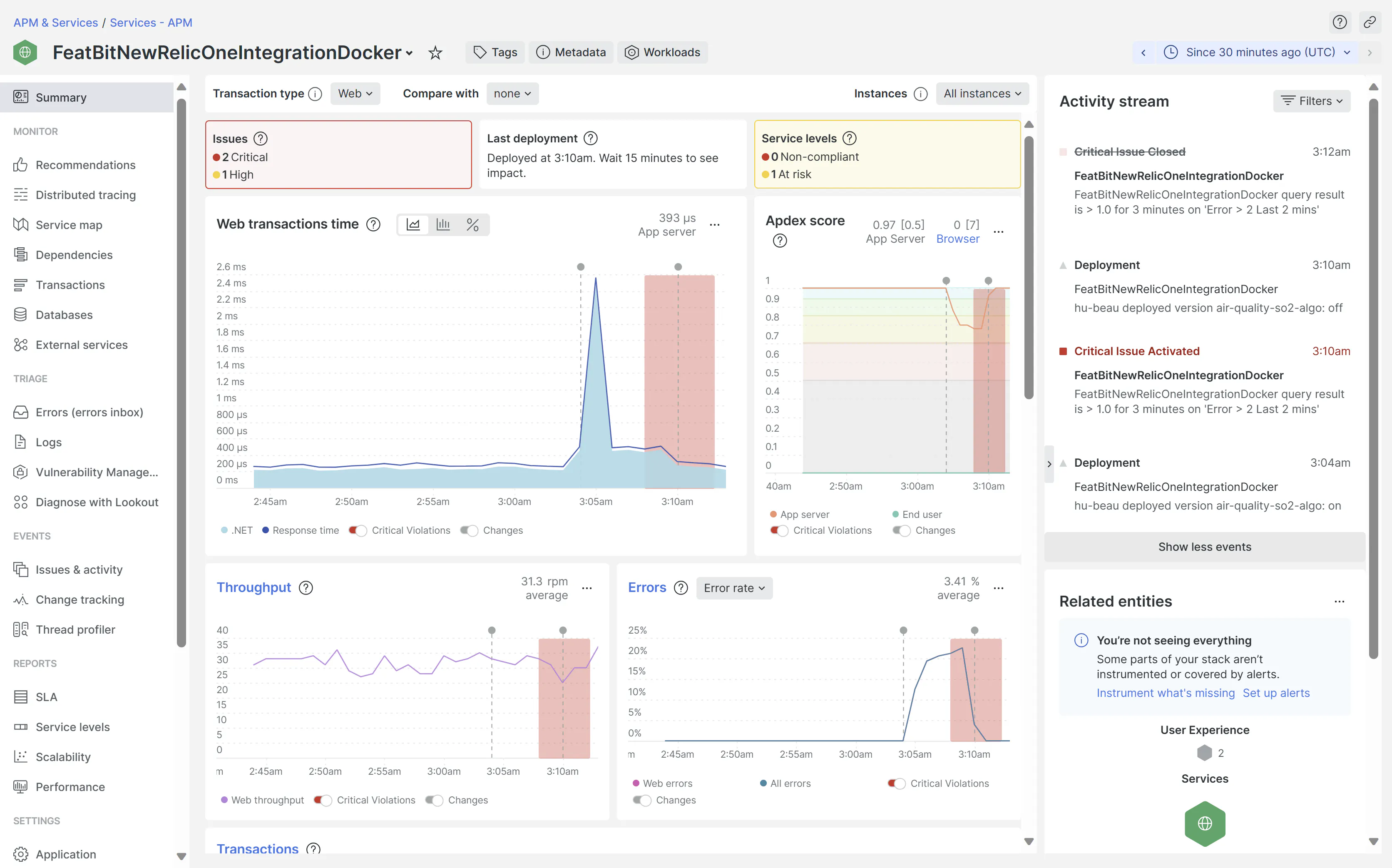
- Run old and new evaluations in parallel while LaunchDarkly remains authoritative. Compare variation results without changing the user experience.
- Test SDK startup, cache behavior, provider outages, network partitions, configuration propagation, audit history, and rollback.
- Move one low-risk service or audience first, observe it, and keep the old path available until the rollback window closes.
Where runtime support aligns, OpenFeature can reduce code-level coupling by standardizing the evaluation API. It does not automatically translate control-plane data, targeting semantics, flag history, permissions, or rollout workflows.
The detailed self-hosted feature flag migration playbook expands this into parallel-run, dual-write, validation, cutover, and rollback phases.
How to Choose
- Choose FeatBit when self-hosted ownership, release-control workflows, data boundaries, and predictable operations are the main reasons for leaving LaunchDarkly.
- Choose Flagsmith when feature flags and remote config belong in the same platform and its identity, segment, hosting, and governance model fit your team.
- Choose Unleash when its activation-strategy model and open-source/enterprise operating choices map cleanly to your rollout architecture.
- Stay with LaunchDarkly when its existing workflows, integrations, governance, and managed operation create more value than a migration would recover in cost or control.
The winner should be the platform that can reproduce one real release safely, explain every evaluation result, survive the failure modes you care about, and roll back without a redeploy.
Try FeatBit Against Your Actual Release Requirements
If private deployment is on your shortlist, start with Docker Compose, connect one required SDK, and recreate one representative release. Include a targeted customer, a percentage rollout, and a known fallback. Use the parity kit above to make differences visible before a cutover.
For a procurement or platform review, contact FeatBit with your required runtimes, current flag types, hosting boundary, and governance controls. That produces a more useful discussion than comparing a generic feature count.
Compare Alternatives for Your Current Platform
The following guides examine different migration jobs, rather than treating every flag product as interchangeable:
- Dedicated providers: ConfigCat alternatives for control-plane ownership, DevCycle alternatives for typed-variable migration, Unleash alternatives for licensing and strategy translation, and Flagsmith alternatives for identity and remote configuration contracts.
- Observability and analytics platforms: Datadog feature flag alternatives, Mixpanel feature flag alternatives, and PostHog feature flag alternatives explain how to retain measurement while separating release control.
- Delivery and infrastructure platforms: CloudBees feature flag alternatives distinguish legacy migration from current Unify, Hyphen AI feature flag alternatives examine evaluation and management boundaries, and Cloudflare Flagship alternatives qualify edge and origin integration.
These guides were checked against official product sources on November 8, 2026. Earlier source notes below describe the original LaunchDarkly comparison review.
Frequently Asked Questions
What are the main open-source alternatives to LaunchDarkly?
For a feature-flag-first shortlist with self-hosted and commercial paths, start with FeatBit, Flagsmith, and Unleash. This is a deliberate shortlist, not a claim that no other product can provide feature flags.
Why are A/B testing platforms not primary alternatives here?
The core migration job is replacing flag evaluation, targeting, rollout, SDK, governance, and rollback behavior. An experimentation-first product should enter the primary shortlist only when experiment design and analysis are the buyer's dominant requirements.
Is one alternative the closest drop-in replacement?
No universal drop-in replacement exists. Context models, rule precedence, percentage bucketing, SDK topology, governance, and plan boundaries differ. A shadow-evaluation proof of concept is more reliable than a feature matrix.
Does self-hosting eliminate vendor lock-in?
It changes the ownership boundary but does not eliminate switching cost. Application SDK calls, flag names, context schemas, targeting rules, workflows, and operational practices can still create coupling. Open standards and a documented migration path reduce that risk.
Sources and Review Scope
- LaunchDarkly claims were checked against its official targeting rules, progressive rollout, and experiment flag documentation.
- FeatBit claims were checked against the official FeatBit repository and deployment options.
- Flagsmith claims were checked against the official Flagsmith repository, self-hosting documentation, and OpenFeature documentation.
- Unleash claims were checked against the official Unleash repository, activation strategy documentation, and feature availability documentation.
- Sources were reviewed on July 20, 2026. This article avoids unsupported price, performance, security, compliance, customer-outcome, and market-rank claims.
The edition checklist and migration parity kit were reviewed on November 16, 2026. The downloadable examples test the local comparator; no cross-vendor performance benchmark is claimed.